
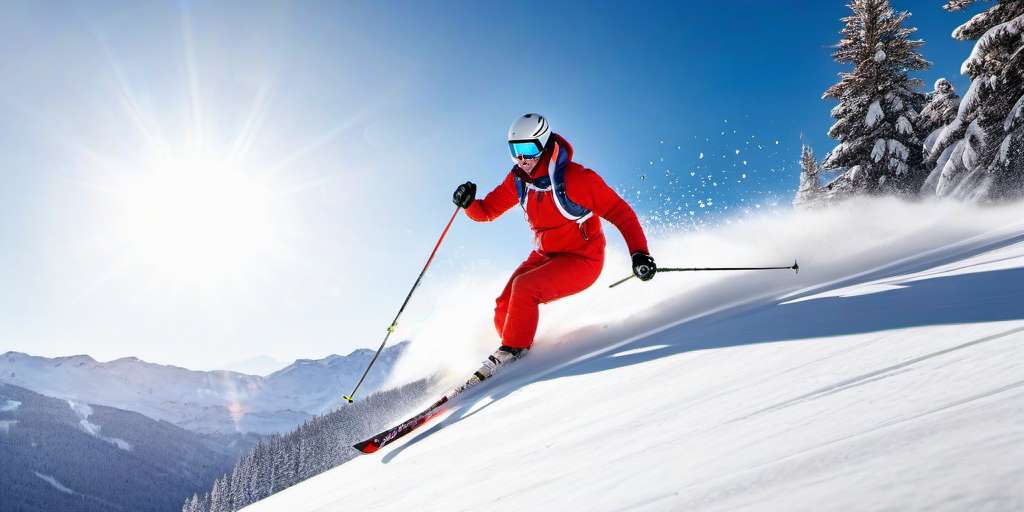
Refining parallel skiing means linking turns with more precise pressure and edge changes, while adapting your line and speed to the terrain. Keeping your skis parallel is the starting point. The next step is being able to choose how you turn without relying on sudden braking at the end of every turn.
If you still open into a wedge to start most turns, begin with basic parallel skiing. This guide is for skiers who already link parallel turns on suitable runs and want to improve their technique.
What changes as your parallel turns improve
Imagine a run where the first few turns feel comfortable, but then you pick up speed and have to ski across the whole piste to slow down. Bringing your feet closer together may not solve it. Look at the shape of your turns, your balance and how you transfer pressure from one turn to the next.
| Aspect | Sign to look for | Goal |
|---|---|---|
| Line | You brake abruptly at the end of every turn | Regulate your speed with turns you can complete |
| Pressure | A ski crosses or drifts away without you intending it to | Distribute and direct pressure gradually |
| Transition | You get stuck between turns | Release pressure from the previous turn and prepare for the next |
| Rhythm | You only feel comfortable turning one way | Link turns in both directions without rushing |
Skidding is part of good skiing too
Skidded turns can be deliberate and well controlled. Both skidded and carved turns work in different situations. A turn with very little sideways slip may be unsuitable for the space, gradient or speed you need.
Stance width and range of movement vary from turn to turn. An instructor can help you recognise when a movement steers the skis and when you are compensating for a loss of balance. You can work on this in a private technique lesson in Baqueira.
Three simple ways to practise
Repeat a comfortable line
On a wide, open piste that suits your level, repeat a short series of similar-sized turns. Make the exercise easier if you have to speed up to maintain the rhythm. Leave plenty of space for others and share the piste.
Notice what happens between turns
Notice whether you finish one turn tense and start the next with jerky movements. Work with your instructor on one correction at a time, then see whether it changes the result.
Compare both sides
Describe the difference in specific terms. “I brake at the end when I turn left” is more useful than “I ski badly”. Find out what is happening before trying to make both turns look identical.
How to tell if you are improving
A useful sign is being able to repeat a familiar run at a speed you choose and finish with room to stop. A harder run alone tells you little about progress. If changing snow or gradient makes you lose that control, go back to easier terrain or an easier exercise.
If you want more time to observe, make corrections and put them into practice, consider a full day with an instructor, depending on your fitness and goals. You can take breaks between runs.
For a technical reference, the PSIA-AASI fundamentals explain how balance, pressure, steering and edging work together. Adapting them to the situation is more useful than memorising a rigid stance.
Frequently asked questions
Are refined parallel turns the same as carving?
No. Improving your parallel turns involves controlling both skidded and steered turns. Carving is a specific way to guide your skis on their edges with little sideways slip.
Do I need to keep my skis together?
Leave enough space between them to balance and adapt your movements to the situation. Avoid forcing a fixed stance.
Why do I speed up when I link turns?
Your line, the way you finish turns or a rushed transition could all play a part. Someone needs to watch you ski to identify the cause.
Do I need harder runs to improve?
A familiar run that suits your ability gives you room to focus and see whether you can repeat turns with control.