
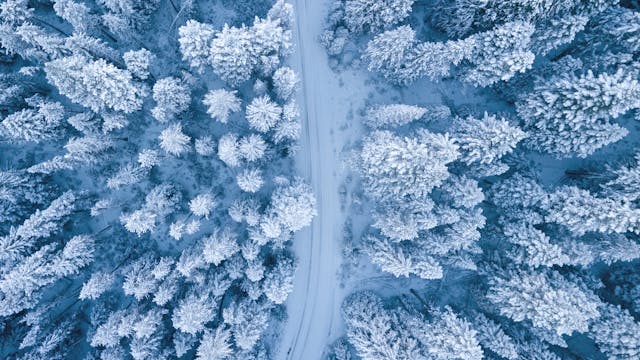
Exploring the plants and wildlife of Val d’Aran in winter starts with watching the forest and the landscape from a distance. You may notice animal tracks and the contrast between snow-covered vegetation and exposed trees. Wildlife sightings vary from one walk to the next.
What the forest can tell you
The valley’s visitor guide to plants and wildlife explains how what you can see changes with the seasons. Tracks, migrations and periods of activity differ between summer and winter.
| What to observe | What you might notice | How to act |
|---|---|---|
| Vegetation | Differences in height and snow cover | Look without breaking branches or picking plants |
| Tracks | Footprints and marks in the snow | Leave them where they are and resist following them |
| Birds | Movement and silhouettes in the distance | Keep your distance and avoid using bird calls |
| Landscape | Woodland, open areas and terrain | Stay on suitable, authorised routes |
Why it pays to give capercaillie plenty of space
The Government of Catalonia describes the capercaillie’s habitat in cold mountain pine forests and records its presence in Val d’Aran. This is a threatened species. Avoid seeking it out or sharing sensitive locations.
The valley’s visitor guide also lists the rock ptarmigan. Treat a sighting as a welcome surprise and stay on the piste or your designated route if you spot an animal.
Choosing a guided walk or a dedicated wildlife outing
If you’d like to explore the area on foot, take a look at skiFamily’s guided snowshoe walk. Check the route and ask whether the outing covers wildlife, track identification or opportunities for sightings.
For a dedicated wildlife outing, find a guide who offers one and can explain how they observe animals. Conditions on some days may warrant changing your plans or staying in.
Helping children observe wildlife without chasing it
Comparing trees, snow shapes or tracks from the trail can spark curiosity even if no animals appear. Avoid feeding wildlife, making sounds to attract it or leaving the route to follow footprints.
If your trip combines time in nature with learning on the slopes, the children’s ski lessons are organised around learning to ski. Plan environmental education and wildlife observation separately.
Coming away with a better understanding of the valley can be the best memory of the day. Take time to look around and enjoy what you happen to see.
Frequently asked questions
Can wildlife sightings be guaranteed in winter?
No. Sightings depend on animal behaviour and conditions. Give wildlife space and allow encounters to happen naturally.
Should I follow tracks to find animals?
No. Look at tracks from the route and give the animal plenty of space.
Does the snowshoe walk include a wildlife programme?
Check with the provider to find out exactly what the activity includes.