
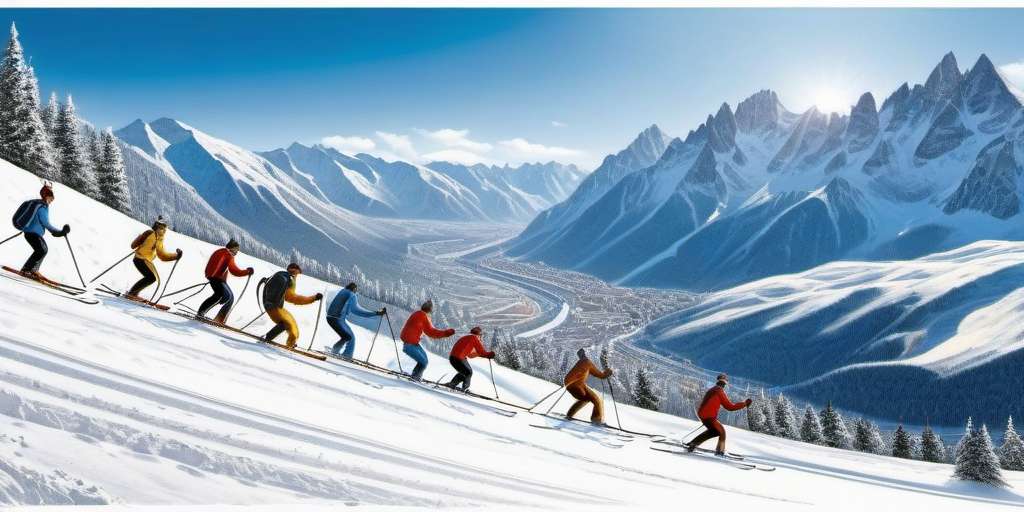
There is no known single inventor of skiing. The practice cannot reliably be traced to one person. People have travelled over snow on skis for thousands of years. Norway played a prominent role in modern skiing, and the development of competitive alpine skiing is also closely tied to the Alps.
Three questions often get mixed up: when people first used skis, who helped develop techniques and equipment, and how modern competitions were organised. Each has a different answer.
From an ancient tool to several sports
| Stage | What the cited sources tell us | What this does not establish |
|---|---|---|
| Early use | The Holmenkollen museum displays a Norwegian find that is about 5,200 years old | Who invented skiing worldwide |
| Modern development | Norway has a long skiing tradition and was home to notable pioneers | That one person developed all of modern skiing |
| Competitive alpine skiing | Its development was shaped by the terrain and competitions of the Alps | That the first skis were invented there |
| Olympic programme | Alpine skiing made its Olympic debut in 1936 | That skiing began that year |
What ancient objects tell us
The exhibition The White Track at the Holmenkollen Ski Museum opens with Drevjaskia, a find the museum presents as Norway’s oldest, dating back about 5,200 years.
This archaeological find comes from a particular place and belongs to a particular collection. It cannot identify one person as the inventor of skis or give an exact date for the start of skiing worldwide.
The museum traces skiing to the need to travel across snowy ground. That use predates lift passes, ski lifts and ski holidays.
Why Norway features so prominently
The Winter Joy exhibition covers the growth of outdoor recreation in the nineteenth century and the development of skiing practices and equipment. It shows how an everyday means of travel evolved into an organised sport.
Sondre Norheim was a pioneer of modern skiing. The International Olympic Committee’s Winter Games archive identifies him as such in its account of the Oslo 1952 torch relay from Morgedal. The earliest skis predate his contribution by thousands of years.
How alpine skiing entered the picture
Competitive alpine skiing evolved through courses and events in the Alps. The official history of Garmisch-Partenkirchen 1936 records its Olympic debut there and highlights Arnold Lunn’s role in the development of alpine competition.
The first Olympic alpine skiing events were combined downhill and slalom events for men and women. Their addition to the programme marked a milestone in the sport.
How skiing disciplines still differ
Cross-country, alpine, touring and telemark skiing each have their own terrain, equipment and techniques. Their histories are connected, but their equipment serves different purposes. See our comparison of skiing disciplines.
If this history inspires you to try alpine skiing in Baqueira, see our beginner ski lessons. For children, see our children’s ski lessons and consider your child’s current experience and needs when deciding when to start.
Frequently asked questions
Did Sondre Norheim invent skiing?
He was a pioneer of modern skiing, but people had already used skis for thousands of years.
Did skiing begin as a holiday sport?
No. Historical sources show that skis were used to travel over snow long before modern recreation and competition developed.
Does the 5,200-year-old find mark the origin of skiing worldwide?
The museum presents it as the oldest Norwegian find. It cannot establish a date or identify an inventor for skiing worldwide.
When did alpine skiing make its Olympic debut?
It debuted at Garmisch-Partenkirchen in 1936, with combined downhill and slalom events for men and women.