
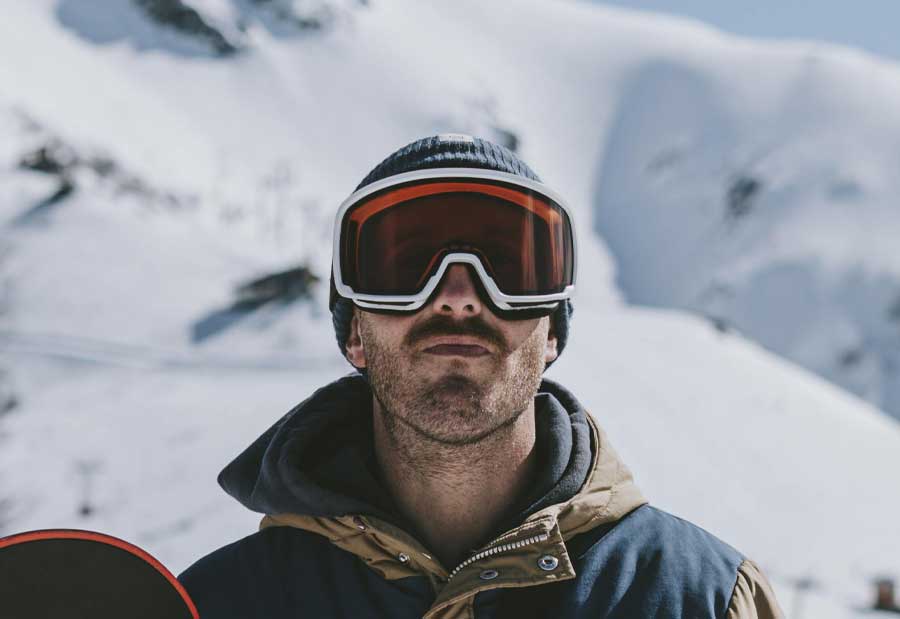
For skiing in low light, choose a lens designed for those conditions and check its visible light transmission and UV protection. A very dark lens can make it harder to see on an overcast day. If you can’t make out the terrain clearly enough, change your plan even with suitable goggles.
Check the specifications alongside the lens colour
The colour you see from the outside and a mirrored finish give you limited information about how much light reaches your eyes. Check the specifications for the exact lens, as the frame can be sold with different lenses.
| Specification | What it tells you |
|---|---|
| VLT or visible light transmission | How much visible light passes through the lens |
| Filter category | The light conditions the lens is designed for |
| UV protection | The stated ultraviolet protection |
| Compatibility | Fit with your helmet and, if applicable, prescription glasses |
Julbo offers category 1 lenses for poor weather. The right lens for an overcast day still depends on the light and the other specifications of the model.
If the light changes during the day
Goggles with interchangeable lenses let you switch to another compatible lens. A photochromic lens changes tint within a specific range. Check that range and the manufacturer’s recommended conditions, including how well it covers fog or bright sun.
For more general buying advice, see how to choose ski goggles. Use the checks here when your main concern is low light.
Try the goggles with your helmet
Check for pressure, see how much of the slope you can see and make sure the frame sits correctly. If you wear prescription glasses, check whether the model fits over them. Before children’s ski lessons, check the fit on the child. A small adult frame may sit differently on a child’s face.
Check separately for fogging
If the inside fogs up, follow the manufacturer’s care instructions and check ventilation and fit. Find out how to clean the inner surface before rubbing it. Address moisture and fit separately when considering a different lens category.
If you can’t see enough, change the plan
Tell your instructor during your ski lesson in Baqueira. Choose terrain and speed according to what you can actually see, and stop if necessary, even with a lens designed for poor weather.
Frequently asked questions
Does a darker lens always offer better protection?
Check the intended light conditions and the stated UV protection separately.
Do photochromic lenses work in every condition?
They change tint within a defined range. Check the specifications for the model.
Can goggles make it safe to ski when I can’t see the shape of the terrain?
If you can’t see the terrain far enough ahead, adapt your plan or stop.
Is the outer lens colour enough to choose?
Check visible light transmission, category, UV protection and compatibility.