
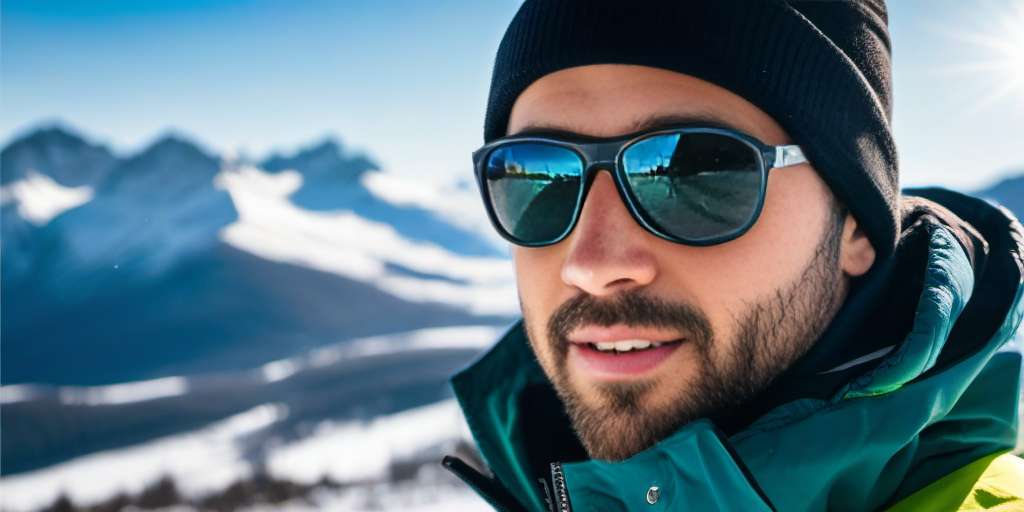
Yes. When it snows, wear eyewear suited to snow with UV protection, even on cloudy days. Snow reflects ultraviolet radiation, and clouds do not eliminate exposure. For skiing, goggles with UV protection and a lens suited to the current light are usually a practical choice.
Consider UV protection and visibility separately. A very dark lens reduces visible light and may make terrain harder to see in low light.
Three things to check when protecting your eyes
| What to check | Purpose | What can be misleading |
|---|---|---|
| UV filter | Protection from ultraviolet radiation | A dark tint or mirrored finish |
| Visible light | Seeing the terrain in the prevailing light | Using a dark lens in all conditions |
| Fit and coverage | Comfort against your face and with your helmet | Choosing on appearance alone |
Why protection matters even when you cannot see the sun
The American Academy of Ophthalmology explains why eye protection matters in winter: snow reflection, altitude and exposure on cloudy days all play a role. Put your eyewear on before you notice glare.
This applies to skiers and to anyone walking or spending time in snowy surroundings. Wear suitable protection even if you are staying off the slopes.
What to check in your eyewear
- UV filter: look for a UV400 rating or a statement that the lenses block 100% of UVA and UVB.
- Intended use: choose eyewear suitable for the activity and snow conditions.
- Coverage and fit: check that it stays in place and gives adequate coverage at the sides.
- Lens: match it to the light level and follow the manufacturer’s recommendations.
The Academy’s information on sunlight and eye health explains that UV protection is separate from the lens’s appearance. Check the stated UV rating on dark, mirrored or polarised lenses.
Sunglasses or goggles for skiing?
Goggles help protect against wind and snow as you ski and should fit with your helmet. An uncomfortable frame, an unsuitable lens or fogging can make it harder to see. Try the helmet and goggles on together before your first day.
For lens categories and fit, see our ski goggle guide. This article covers when to protect your eyes. The guide explains how to choose a lens.
If you are taking ski lessons in Baqueira, prepare your eyewear with the rest of your equipment. If you cannot see the contours of the slope or your goggles fog up, tell your instructor before continuing.
Children and people who do not ski
Use eye protection outside lesson time as well. Check children’s eyewear for time spent waiting or playing in the snow. Before children’s lessons, make sure the eyewear and helmet fit together and your child can see comfortably.
If you develop discomfort or pain
UV exposure can cause photokeratitis, also called snow blindness. The American Academy of Ophthalmology describes symptoms such as pain, watery eyes, light sensitivity and blurred vision, which can appear after exposure.
If you experience eye pain or a change in vision, stop the activity and seek medical assessment. Avoid using a darker lens to keep skiing through symptoms. The ski school provides instruction. Eye symptoms need medical attention.
Frequently asked questions
Should I protect my eyes when it is snowing and cloudy?
Yes. Clouds do not eliminate UV exposure, and snow reflects radiation. Wear eye protection suited to the activity.
Do polarised lenses guarantee UV protection?
Check the product’s stated UV protection. Polarisation alone cannot establish it.
What should I do if I have eye pain or blurred vision in the snow?
Stop the activity and seek medical assessment. Avoid continuing simply by switching to a darker lens.