
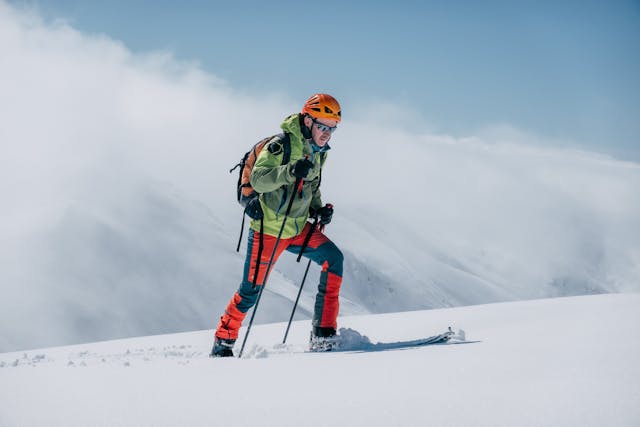
To build leg strength for skiing, choose exercises that suit your fitness and progress gradually. Sitting down and standing up from a stable chair, supported mini-squats and supported heel raises are general examples. Choose what works for you.
If you have pain, an injury or doubts about what’s appropriate, seek advice before starting. Physical conditioning and rehabilitation serve different purposes.
Three examples with full instructions
The NHS guide to basic strength exercises explains how to use support and progress. Read the full instructions before trying any of the exercises.
| Exercise | Preparation |
|---|---|
| Sit-to-stand | A stable chair without wheels that won’t slide |
| Supported mini-squat | A comfortable movement and secure support |
| Supported heel raise | Controlled movement and a stable surface |
Start with a version you can control before adding weights, doing it on one leg or using an unstable surface. Increased difficulty alone tells you little about how useful an exercise is for skiing.
What to check as you practise
- You understand the movement and can repeat it with control.
- The support and surface are suitable.
- You feel no pain or discomfort.
- The load and progression suit your circumstances.
The repetition counts in a general guide illustrate the exercises. If you need an individual programme, speak to a qualified professional and explain your activity and goals.
Check your form before adding repetitions
Make sure your support is stable and that you can control the movement without rushing to finish. If you’ve been given an individual plan, follow its progression over the generic guidance you find online.
Endurance also matters. For aerobic training, see how to build endurance for skiing. If you have a previous injury, start with professional guidance on what load is appropriate, even if your holiday is approaching.
Strength and technique work together on snow
During a private ski lesson, you can work on using the strength and skills you already have. Practise controlling speed, choosing terrain and preparing for turns alongside building strength.
If you choose a day with an instructor, allow time for breaks. Adjust your plans during the day based on how you feel.
Warm up before skiing
The guide to warming up before skiing explains how to start gradually. An intense strength workout immediately beforehand serves a different purpose.
When organising group lessons, account for different abilities and levels of experience. Choose preparation that suits a recreational ski trip.
Frequently asked questions
Do I need jumping exercises to prepare my legs?
Jumping is optional. Your choice of exercises and progression depend on your circumstances.
Does getting stronger guarantee I won’t get injured?
No. Strength is one part of preparation, alongside technique, suitable equipment and appropriate terrain.
Is leg training the same as warming up?
No. They serve different purposes and take place at different times.