
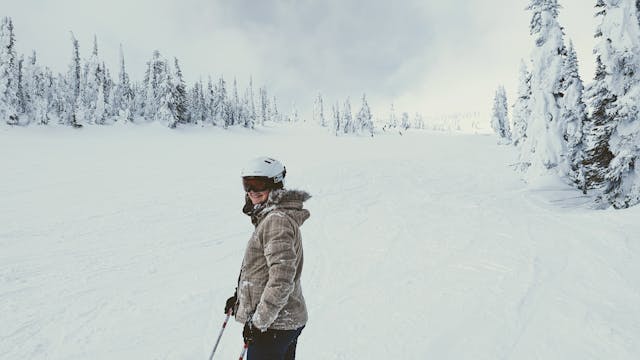
When dressing in layers to ski in Baqueira, wear something that manages moisture next to your skin, an insulating layer and an outer layer that protects you from wind and snow. Adjust them to the weather and how hard you’re working. Adding thicker layers without checking whether you’re sweating can make you less comfortable.
Three jobs your layers need to do
| Layer | Purpose | What to check |
|---|---|---|
| Base layer | Manage moisture next to the skin | Fit and fabric that won’t stay soaked |
| Mid layer | Provide insulation | Warmth without restricting movement |
| Outer layer | Protect against wind and moisture | Fastenings, protection and ventilation, depending on the garment |
The REI guide to layering explains these functions. How you combine your layers also depends on how hard you’re working and how easily you feel the cold. The right number of layers can change from one day to the next.
Adjust your layers as you ski, wait and take breaks
While skiing, you may need to open vents or remove a layer. On a lift or during a break, you may feel colder because you’re moving less. Make changes in a suitable spot and allow time to put clothing and accessories away securely.
Before a private ski lesson, check the forecast and make sure you can bend and move your arms freely. Check that you stay covered as you change position.
Hands, feet and spare clothing
Check that your gloves and socks are dry and fit without adding pressure. Another layer inside your boots can change the fit and may not make your feet warmer. If a boot hurts, ask the shop that fitted it to have a look.
Before children’s lessons, check sizes and fastenings. Give the accompanying adult an easy-to-reach dry change of clothing and mention anything the child finds difficult to put on or take off.
Check whether moisture is making you cold
If you finish with wet clothing underneath, consider sweat, ventilation and fabric before adding another layer. If your clothing is soaked or you can’t warm up, get somewhere sheltered and change your plans. Our guide to feeling cold while skiing (in Spanish) covers what to check and when to ask for help.
Follow the label when washing and drying
Technical clothing varies in how it should be cared for. GORE-TEX provides care instructions for its fabrics and advises following the garment manufacturer’s instructions. Check each item before air drying, tumble drying or applying a water-repellent treatment.
Make separate arrangements with a shop for any clothing you need to buy or rent for the trip.
Frequently asked questions
Do more layers always make you more comfortable?
Comfort depends on fit, moisture, ventilation and how hard you’re working, as well as warmth.
Can I wash all technical clothing the same way?
Follow the care label and the manufacturer’s instructions for each garment and fabric.