
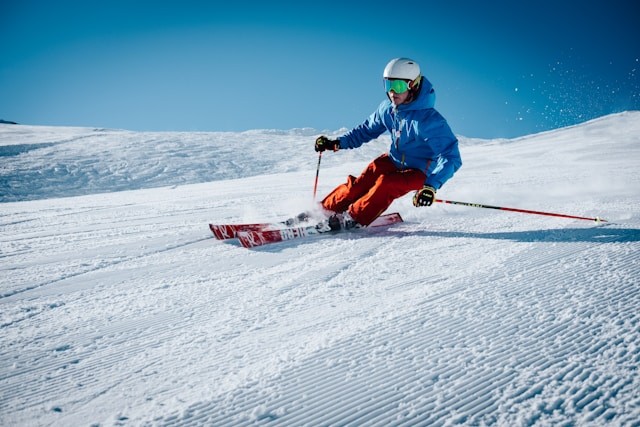
To get less tired while skiing, pick terrain that suits your level, ask your instructor to review movements that make you tense and plan breaks. Expect some effort as your stance changes throughout the run.
Notice when you start to get tired
Excess tension or skiing with your weight too far back can make a run harder. Consider other possible causes of fatigue as well. Describe where it starts and what changes, then work on one adjustment on familiar terrain.
You can look at movements that make you tense in a private lesson to review your technique. Explain your experience and specific needs before arranging the session.
| Situation | What to do |
|---|---|
| Stiffness | Consider how tense you are and how difficult the run is |
| Pain from ski boots | Have the fit checked |
| Repeated mistakes | Rest and simplify the plan |
| Exhaustion | Stop skiing |
Leave yourself time to finish
If your movements become less precise or you start repeating mistakes, simplify the plan. If you feel pain, exhaustion or discomfort, stop and seek help as needed. Plan for water, food and rest, and leave the last run optional.
Work on one cause at a time
A private lesson to review your technique can help you identify movements that make you tense. A day with an instructor offers a different format and allows for breaks. Before booking more time, explain how you feel and how long you can usually ski comfortably. Seek medical assessment for persistent discomfort before continuing to practise.
Frequently asked questions
Does getting tired always mean my technique is poor?
No. Fitness, rest, equipment and conditions can all play a part.
Should I do one last run if I’m exhausted?
If you lose precision or control, change the plan or stop for the day.