
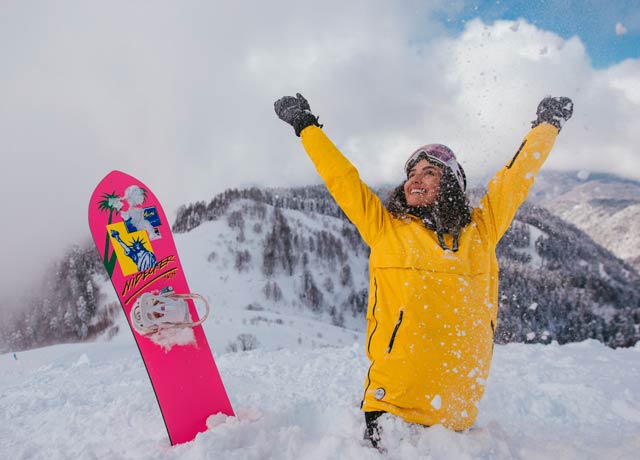
Start with your weight, boot size, ability and the terrain where you will ride. Then compare the model’s length, width, flex and profile. A board reaching your chin tells you little about whether it fits.
If you are starting out, renting can help you understand what you need before buying. Describe what you can do today and the terrain you actually ride.
How to read Snowboard specifications
| Specification | What to consider | Mistake to avoid |
|---|---|---|
| Length | Weight, ability and the model’s size guide | Choosing by chin height alone |
| Width | Boots and how the setup is mounted | Choosing by the wide label alone |
| Flex and profile | Intended use and response | Buying the most demanding option to try to progress faster |
| Compatibility | Bindings and mounting system | Assuming every binding will fit |
Use the size guide for the specific model
Check the manufacturer’s weight range and the boots you will use. Height is only one consideration. Some boards are designed to be ridden in different lengths from what you might expect with another model.
The Burton buying guide includes weight and boot size among its selection criteria. Read the recommendations alongside the product specifications and check sizing for the brand and model you are considering.
Width: check your boot on the mounted setup
The width needs to work with your boots and bindings. Neither a wider nor a narrower board is automatically the right choice. Ask a specialist to check how the boot sits with the planned mounting.
To avoid buying incompatible parts, see our guide to choosing snowboard bindings. Check how the board, boots and bindings work together before buying.
Flex, profile and shape: what to ask
Flex describes how the board responds. Its profile and shape also affect how it rides. Camber, rocker, twin and directional describe design choices that suit different uses.
Ask who the board is designed for, where it is meant to be ridden and what you are likely to feel on it. Choose a design that suits how you ride today.
If you are planning snowboard lessons in Baqueira, tell us about your equipment and experience. Your instructor can help with technique and how the board feels. Ask a specialist shop to check sizing, compatibility and mounting.
Choose for the terrain you ride most often
If you mostly ride groomed runs, start there. Give more weight to your usual terrain than to an occasional powder day or jumps you do not yet practise.
A specialist shop can help you compare boards designed for the same use. If possible, test them in similar conditions on terrain that suits your ability. Different riders can feel the same change in length differently, and board design matters too.
If you are still choosing between skiing and snowboarding
Trying the sport before buying can help you avoid a rushed decision. If some of your group prefer skis, they can look separately at skiFamily’s ski lessons. You can share a holiday and choose different activities.
Questions to answer before paying
- Do the weight range and width suit you and your boots?
- Does the model suit your experience and usual terrain?
- Are the bindings and their components compatible?
- Who will inspect and mount the setup?
- What exchange or trial terms are available?
Choose a board you can explain in terms of fit and use. Graphics, a discounted price or someone else’s choice tell you little about how it will work for you.
Frequently asked questions
Should the board reach my chin?
Chin height alone is insufficient. Check your weight, boot size, ability and the model’s guide.
Will a stiffer board help me learn faster?
Stiffness alone cannot determine progress. Choose a response suited to your ability and intended use.
Can I choose the width without bringing my boots?
Check the complete setup. The nominal boot size and the board’s width label cannot tell you everything about the fit.