
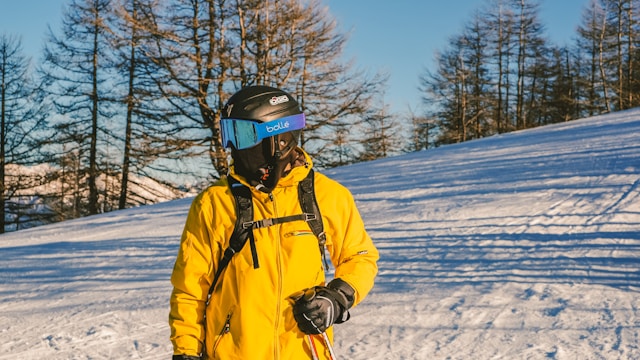
If your goggles fog up and you can’t see the piste clearly, stop in a visible spot where you won’t obstruct others. Ask for help if you can’t reach a suitable spot while staying in control. Taking your goggles off and skiing down without eye protection is not a reliable solution.
Fog, snow inside the goggles and the wrong lens are different problems
A low-light lens won’t prevent condensation. Before replacing your goggles, check for moisture on the inside, snow that got in during a fall or a lens that’s too dark for the conditions. If you wear prescription glasses underneath, check those too.
| What you notice | What to check |
|---|---|
| Fog inside | Moisture, ventilation and drying instructions |
| Snow inside after a fall | How to remove it without damaging the inner surface |
| Blocked vents | Helmet and clothing fit and positioning |
| Dark view without fog | Whether the lens suits the light |
| Fog on prescription glasses | Which surface has fogged up |
Leave the wet inner surface alone
It may have a delicate anti-fog coating. Uvex advises against rubbing it. Follow the cleaning and drying instructions for your model. Avoid paper, household cleaners and direct heat.
Check whether the manufacturer allows an anti-fog spray before using one. A harsh cleaning method can turn a temporary moisture problem into permanent damage.
The same applies in a Snowboard lesson. Adapt the exercise to what you can see, even if it’s short or you’ve practised it before.
Check how everything fits together
Check whether your helmet or neck warmer covers the vents and whether the goggles sit comfortably without excessive pressure. Tightening the strap won’t fix a poor fit between goggles and helmet. If it keeps happening, take both to a specialist to check their fit and condition.
During a private ski lesson, tell your instructor if you can’t see clearly before trying the exercise again.
Start the next day with dry equipment
Dry the goggles before putting them away and follow the storage instructions. Check the foam, lens and strap after a fall. If they’re damaged, ask about repair or compatible replacements.
Before children’s lessons, try the goggles and helmet together and ask the child what they can see. The lens can look clear from the outside even when they can’t see properly.
For light transmission, see the guide to goggles for overcast days (in Spanish). For vision correction, see the guide to OTG goggles and prescription inserts (in Spanish). These address different needs.
Frequently asked questions
Can I wipe the inside with my sleeve?
Avoid it. Doing so may damage the coating. Follow the manufacturer’s instructions.
Can I use any anti-fog spray?
Check whether it’s compatible with your lens and its coating.
Will a clear lens stop fogging?
Light transmission and condensation are separate issues.