
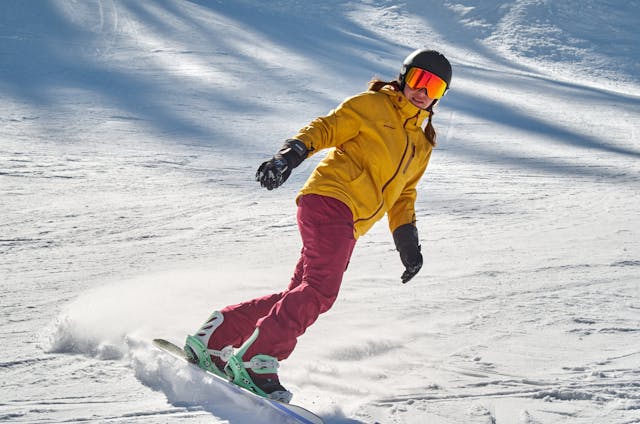
Changing direction on skis can mean moving around on flat ground, turning while skiing downhill or rejoining a piste after stopping. Each situation calls for different skills, which take time to learn.
On flat ground, start by getting used to your equipment
Get familiar with your boots, skis and the space around you in a suitable area. An instructor can show you how to reposition yourself without crossing your skis or getting in anyone’s way. Practise on flat ground before trying movements on a slope, where the skis respond differently.
At your first private ski lesson, mention if you’ve never worn skis before. Learning how to move on skis can be part of that first lesson.
| Situation | What you need to do |
|---|---|
| Flat ground | Handle and position your equipment |
| Downhill | Control your line and speed |
| Rejoining a piste | Look around and set off without endangering others |
| A section beyond your ability | Stop and ask for help where possible |
Turning downhill takes coordination
Direction, balance and pressure on the skis work together. Turning your shoulders or shifting all your weight suddenly onto one foot can be unsuitable. Choose how to progress based on how you move on appropriate terrain.
If you’re starting out, read about the snowplough and your first turns. If you already link turns, choose your next exercise accordingly.
Before setting off after a stop
Look uphill and downhill to check for traffic. Rejoin where other people can continue without swerving around you. Check for yourself, even if a friend says it’s clear.
In children’s ski lessons, explanations and exercises are adapted to the child’s experience. Show children how to turn and where to rejoin the piste so they know what to do when asked to turn.
If you can’t change direction in control
Avoid speeding up to force a turn or drifting onto more difficult terrain. Stop in a suitable place if you can and ask for help. Choose a piste you can manage with the skills you already have.
If you’re travelling together, plan group lessons around each person’s starting point. Choose terrain that suits each skier’s needs.
Frequently asked questions
Can I learn to turn in seconds?
There’s no guaranteed timescale. Progress depends on the skier and the situation.
Is changing direction on flat ground the same as turning downhill?
No. The conditions and the skills you need are different.
What should I do before rejoining a piste?
Look uphill and downhill and make sure you can set off without endangering anyone.